

Most people don’t struggle with packing because they lack space. They struggle because they pack for every possible situation instead of the trip they’re actually taking. If you’ve ever dragged an oversized suitcase up a flight of stairs, paid a checked bag fee, or come home with clothes you never wore, this guide is for you. Learning to pack light is a skill anyone can pick up, and it makes every part of a trip easier. Here are practical packing tips for beginners, built around a minimalist travel packing approach you can use for a weekend away or a two-week holiday.
Why Packing Light Is Worth the Effort
Packing light saves money, time, and stress. Carry-on travel means no checked bag fees, no waiting at the carousel, and the freedom to move quickly through airports. You also keep your belongings with you at all times, so you don’t have to worry about lost or delayed luggage.
There’s a practical benefit on the ground too. A lighter bag is easier to carry on public transport, cobblestone streets, and stairs in hotels or hostels without elevators. This is a big reason many first-time solo travelers pick it up early.
Start With the Right Mindset
The hardest part of packing light is mental. Experienced carry-on travelers often realize that most of what they used to pack was “just in case” items that never got used. Just in case it rains, just in case there’s a fancy dinner, just in case a button falls off.
Replace “just in case” with a simple question: will I use this at least twice? If the answer is no, and it’s cheap or easy to replace at your destination, leave it at home. Most things you might forget can be bought on the road.
Your Carry-On Only Packing Guide
Step 1: Research Your Destination First
The first step is to check the climate and temperature during your visit: is it hot, cold, rainy, dry, or windy? Your packing list should come from the weather and the activities you’ve planned, not from a generic checklist. A beach week and a city break need very different bags.
Step 2: Choose the Right Bag
Pick a bag that meets your airline’s carry-on limits before you pack a single item. A 40L bag that meets international carry-on size limits is a common recommendation for light travelers. Size and weight rules vary by airline, and budget carriers can be strict, with some capping cabin bags at around 7kg. Check your airline’s rules ahead of time, and note whether you’re allowed a second small personal item. A bag that’s already heavy when empty eats into your weight limit, so choose a lightweight one.
Step 3: Build a Small Capsule Wardrobe
This is the core of minimalist travel packing. Pack a three-day capsule wardrobe that you can remix throughout the trip. Choose clothes in two or three coordinating colors so every top works with every bottom.
A few rules make this easier:
Pack versatile pieces. Multi-purpose outfits give you something for everyday wear and for a nicer dinner. Stick to your list. If it says three t-shirts, pack three. Following your list strictly is how you avoid overpacking. Choose quick-drying fabrics. Quick-drying fabrics let you pack fewer clothes because you can wash and reuse them. A sink wash in the evening means you only need a few days of clothing even on a longer trip.
Step 4: Limit Your Shoes
Shoes take up the most space and add the most weight. Two pairs is the most you’ll usually need: one for everyday wear and dining out, and one for special activities like hiking. Wear your bulkiest pair on the travel day.
Step 5: Wear Your Bulkiest Items
Wearing your bulky clothes and shoes on the plane frees up space in your bag. Your jacket, jeans, and sneakers take up the most room, so put them on rather than packing them. A light jacket can double as a pillow or blanket on the flight.
Step 6: Pack Your Toiletries Smartly
Liquids are the most common carry-on trip-up. Carry-on liquids must fit in one quart-sized bag, with each container at 3.4 ounces or 100ml or less. Decant products into small refillable bottles, or switch to solid options like bar shampoo, solid deodorant, and toothpaste tablets. You can also buy basics like sunscreen or shampoo at your destination if you’re staying a while. That frees up space and weight at the start of the trip.
Packing Tips for Beginners: How to Pack Smarter
Use Packing Cubes or Roll Your Clothes
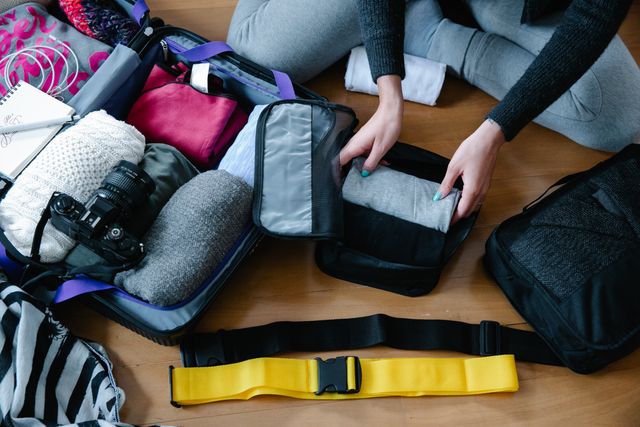
Packing cubes help you compress and organize clothing. Rolling clothes rather than folding them also saves space and cuts down on wrinkles for many fabrics. Cubes keep your bag organized so you can find items without unpacking everything at each stop.
Keep Essentials Within Reach
Keep your passport, phone, charger, medication, and any important documents in an easy-to-reach pocket or personal item. This matters most in airports, where you’ll need them several times before you board.
Skip the Items You Can Do Without
Frequent travelers often pack just one workout outfit and skip separate pajamas, handwashing items mid-trip when needed. You can sleep in a clean t-shirt and shorts you’ll wear the next day again. Small swaps like this add up quickly.
Pack Early and Do a Trial Run
Don’t leave packing until the last minute. Lay everything out the day before, then put back at least a few items. Weigh the packed bag and carry it around your home for ten minutes. If it feels heavy now, it will feel much heavier after a day of sightseeing.
Common Packing Mistakes Beginners Make
Packing outfits for every possible scenario instead of a realistic number of days is the most common mistake. The second is bringing full-size toiletries that don’t pass security. The third is bringing “maybe” items like extra shoes, a second jacket, or several books you never touch.
Another frequent mistake is ignoring airline rules. Some airlines allow only one carry-on item, which means a purse or camera bag may not count as extra storage. Check this before you arrive at the airport so you’re not forced to repack at the gate or pay a surprise fee.
A Simple Packing Checklist
Use this as a starting point and adjust it for your trip:
Clothing: three to five tops, two bottoms, one layer, underwear and socks for three days, and one pair of extra shoes at most. Toiletries: travel-size essentials in a clear bag. Tech: phone, charger, adapter, and headphones. Documents: passport or ID, tickets, booking confirmations, and any insurance details. Extras: a reusable water bottle, a small first aid kit, and a lightweight tote bag for day trips. Keep to this list and you’ll rarely need more than a single carry-on.
Final Thoughts
Knowing how to pack light for travel gets easier with every trip you take. Start by researching your destination, choose a bag that fits airline limits, build a small capsule wardrobe in coordinating colors, and decide ahead of time what you’re willing to leave behind. You’ll quickly find that most of what you used to pack was never needed. Your first trip might feel like a challenge, but once you walk straight past the baggage carousel, you won’t want to go back to checked luggage.