

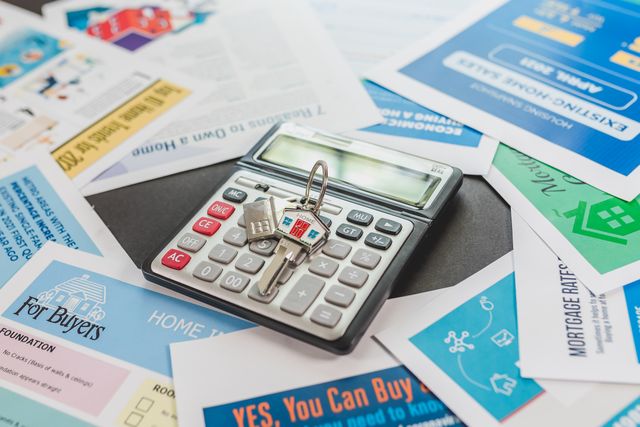
Buying your first home is one of the most significant financial decisions you will ever make. It’s exciting, it’s complex, and for most people, it’s the single largest purchase of their lives. The good news is that the process becomes far less overwhelming when you understand each step before you take it. This residential real estate guide covers everything a first-time buyer needs to know in 2026, from getting your finances to picking up the keys on closing day. Follow these first-time homebuyer tips, and you’ll move through the process with clarity, not confusion.
Understanding the 2026 Housing Market
What the Market Looks Like Right Now
First-time homebuyers in 2026 are entering a market that looks very different than years past. From shifting interest rates to evolving buyer expectations, understanding today’s real estate landscape is essential before making your first move.
The National Association of Realtors expects total home sales to increase around 14% compared to last year, and inventory is up in many markets, making 2026 one of the stronger buyer’s markets in recent years. More inventory means more options and slightly less competition than the overheated markets of recent years, but affordability remains a challenge in many regions.
Your Mindset Going In
Your first home is a starting point, not the finish line. It’s a way to build equity over time, establish roots in a community, and stop paying rent toward someone else’s mortgage. First-time buyers who approach the process with realistic expectations and a long-term mindset tend to make better decisions than those chasing a perfect property at a perfect price.
Many first-time buyers fixate on interest rates. The right home at the right time often beats waiting on market timing. Trying to time the market perfectly is a strategy that keeps many potential buyers on the sidelines longer than necessary. If you’re financially ready and you find a home that fits your needs and budget, that’s the right time to buy.
Step 1: Get Your Finances in Order
Check and Improve Your Credit Score
Your credit score is one of the most important factors lenders use to determine your mortgage eligibility and the interest rate they’ll offer you. Stricter lending standards combined with new buyer assistance programs define the 2026 landscape, meaning preparation and education matter more than timing the market.
In general, a higher credit score unlocks better interest rates, which can save you tens of thousands of dollars over the life of a 30-year mortgage. Check your credit report for errors before applying for a mortgage, and if your score needs improvement, focus on paying bills on time and reducing outstanding balances in the months before you start the buying process.
Save for a Down Payment and Closing Costs
One of the biggest misconceptions among first-time homebuyers is that you need a massive down payment. While a 20% down payment eliminates the need for private mortgage insurance (PMI), many loan programs allow first-time buyers to put down significantly less.
Government-backed loans offer low down payment options, often as little as 3.5%, for first-time buyers. In 2026, over 2,600 programs offer an average of $18,000 in assistance to first-time buyers through grants, forgivable loans, and reduced-rate mortgage programs. Research what’s available in your area before assuming you need to save a full 20%.
Beyond the down payment, budget for closing costs, which typically run between 2% and 5% of the purchase price. These include lender fees, title insurance, escrow costs, prepaid property taxes, and homeowners insurance. Many first-time buyers are surprised by these costs because they’re not part of the advertised property price.
Understand the True Cost of Homeownership
The mortgage payment is only part of what you’ll pay each month as a homeowner. Establish a realistic monthly budget that takes into account your mortgage principal, interest, property taxes, insurance, and utilities, and allocate a monthly budget for future repairs and maintenance.
Budget 1% to 2% of your home’s value annually for maintenance and repairs. On a $400,000 home, that’s $4,000 to $8,000 per year, or roughly $333 to $667 per month, that needs to be set aside to cover things like roof repairs, plumbing issues, appliance replacements, and general upkeep. Ignoring this figure is one of the most common financial mistakes first-time buyers make.
Step 2: Get Pre-Approved for a Mortgage
What Pre-Approval Means
A pre-approval is mandatory to make an offer and proves to sellers that you are a qualified buyer. During pre-approval, a lender reviews your income, assets, credit history, and debt levels, then issues a letter stating the loan amount you qualify for. This letter is what allows you to make competitive offers on properties.
How to Choose a Lender
Apply with at least three lenders to compare interest rates, which are forecasted between 5.5% and 6.5% in 2026. Even a small difference in interest rate compounds significantly over a 30-year loan. Shopping around among multiple lenders is one of the highest-value actions you can take in the entire home buying process, and it costs you nothing but time.
Understanding Your Mortgage Options
Fixed-rate mortgages lock your interest rate for the life of the loan, which provides predictability and protects you from rate increases. They’re the most popular choice for first-time buyers because the payment stays the same from month to month.
Adjustable-rate mortgages (ARMs) start with a lower rate that adjusts after a fixed period. They can offer savings early on but carry the risk of higher payments if rates increase. For most first-time buyers who plan to stay in their home for five or more years, a fixed-rate mortgage offers more stability and less risk.
Step 3: Define What You’re Looking For
Must-Haves vs Nice-to-Haves
Write out two lists before you start touring properties: must-haves and nice-to-haves. Must-haves are non-negotiable: the minimum number of bedrooms, the school district, the maximum commute time, and accessibility features if needed. Nice-to-haves are things you’d love but can live without, a larger yard, a specific kitchen layout, a home office.
This distinction matters because no home will be perfect, and buyers who are unclear on their priorities often end up either passing on good properties for minor reasons or compromising on things that genuinely matter to them.
Location Factors to Research
Spend time exploring the areas you are considering. Taking the time to understand the neighborhood helps ensure that the home you choose fits both your lifestyle and long-term goals.
Beyond the neighborhood feel, research the school district even if you don’t have children, because school quality is one of the strongest drivers of property value. Check crime statistics, proximity to amenities you use regularly, and planned developments in the area that could affect the neighborhood in the years ahead. Drive the route to work during rush hour before you commit, because a commute that looks manageable on a map can feel very different in real traffic.
Step 4: Work With a Real Estate Agent
One of the most valuable resources for first-time buyers is an experienced real estate agent who understands the local market. A buyer’s agent represents your interests throughout the process, helps you identify suitable properties, advises on offer strategy, and guides you through negotiations and paperwork. In most transactions, the seller pays the buyer’s agent commission, meaning their guidance typically costs you nothing directly.
What to Look for in an Agent
Ask about their experience with first-time buyers and local neighborhood trends, and confirm they are full-time agents with a strong network of inspectors and contractors. An agent who works primarily with first-time buyers understands the questions you’ll have and the reassurance you’ll need at each stage of the process.
Interview at least two or three agents before choosing one. Ask how many buyers they’ve represented in the past year, how familiar they are with the specific neighborhoods you’re considering, and what their communication style is like. The relationship works best when you feel comfortable asking questions and trust their judgment.
Step 5: Search for Homes and Make an Offer
How to Evaluate a Property
When touring a home, look beyond the staging and cosmetic details. Pay attention to the condition of the roof, the age of major systems like the HVAC and water heater, the layout’s functionality for how you actually live, and signs of water damage or deferred maintenance. What looks like a minor issue on a viewing can turn into a significant expense after purchase.
First-time buyers often underestimate how important natural light, storage, and layout flow are to everyday livability. Your instinct about how a space feels when you walk through it is worth paying attention to.
Making a Competitive Offer
When you find a property you want, your agent will help you craft an offer based on comparable sales in the area, the property’s condition, and the current level of competition. In 2026’s market, consider an escalation clause if competition is high. An escalation clause automatically increases your offer by a set amount above competing bids up to a maximum you specify, which can help you win a competitive situation without overbidding upfront.
Your offer will also include contingencies, conditions that must be met for the sale to proceed. The most important ones for first-time buyers are the financing contingency (protecting you if your loan falls through) and the inspection contingency (giving you the right to negotiate or withdraw based on inspection findings).
Step 6: Get a Home Inspection
Why Home Inspections Matter
For first-time home buyers, a professional inspection can provide important insight into the true condition of the property. A licensed inspector examines the structure, roof, electrical systems, plumbing, HVAC, and other components of the home and produces a report detailing current conditions and potential concerns.
The inspection report gives you two things: a clearer picture of what you’re buying, and a basis for negotiating repairs or a price reduction if significant issues are found. It’s not a pass/fail test. Most inspection reports include a range of findings from minor maintenance items to more serious concerns, and your agent can help you understand which ones are worth negotiating over.
What Happens After the Inspection
Once you have the report, you can proceed as is, request repairs from the seller, ask for a price reduction to cover the cost of repairs yourself, or in cases of serious undisclosed issues, withdraw from the transaction and recover your deposit if you have an inspection contingency in place.
Step 7: Navigate the Closing Process
What Closing Involves
Closing is when ownership officially transfers from the seller to you. In the days leading up to closing, your lender will finalize the loan, you’ll review and sign a closing disclosure that outlines all final costs, and you’ll arrange to transfer your down payment and closing costs.
The Final Walk-Through
One important step many first-time buyers overlook occurs near the very end of the transaction: the final walk-through. Taking the time to inspect the home carefully can help prevent unexpected issues after the purchase. The final walk-through typically takes place 24 to 48 hours before closing and is your opportunity to confirm that the home is in the agreed condition, that any negotiated repairs have been completed, and that nothing has changed since your last visit. Verify the home is clean and all seller’s belongings have been removed. If something looks wrong or a promised repair wasn’t completed, raise it before signing, not after.
Home Buying Checklist: A Summary of Key Steps
Before you start: Check your credit score. Calculate a realistic budget including all costs. Research down payment assistance programs in your area.
During the process: Get pre-approved with at least three lenders. Define your must-haves and nice-to-haves. Choose an experienced buyer’s agent. Research neighborhoods thoroughly. Never skip the home inspection. Review the closing disclosure carefully before signing.
After you close: Set aside a maintenance fund of 1% to 2% of the home’s value annually. Change the locks on day one. Set up homeowners insurance before your first night.
Common First-Time Buyer Mistakes to Avoid
Buying more house than you can afford. Pre-approval tells you the maximum you can borrow, not the amount you should borrow. Keep your monthly housing costs within a range that leaves you comfortable financial breathing room.
Skipping the inspection to be competitive. The risk of inheriting undisclosed problems is rarely worth the short-term advantage of waiving this protection.
Forgetting about closing costs. Budget for 2% to 5% of the purchase price on top of your down payment.
Making major financial changes before closing. Don’t change jobs, take on new debt, or make large purchases between pre-approval and closing day. These changes can affect your loan approval even after it’s been conditionally granted.
Letting emotions drive financial decisions. It’s natural to fall in love with a property, but purchasing a home that doesn’t fit your budget or has serious undisclosed issues because you’re emotionally attached to it is one of the most expensive mistakes a first-time buyer can make.
Final Thoughts
Buying your first home is a process, not an event, and the buyers who navigate it most successfully are the ones who take the time to understand each step before they’re in the middle of it. These first time home buyer tips are designed to give you that foundation. Get your finances sorted before you start searching, work with professionals you trust, do your due diligence on every property, and approach the whole process as the long-term investment it is. Your first home doesn’t need to be perfect. It just needs to be the right fit for where you are now and a solid step toward where you want to be.